What is the best type of red snapper to use?
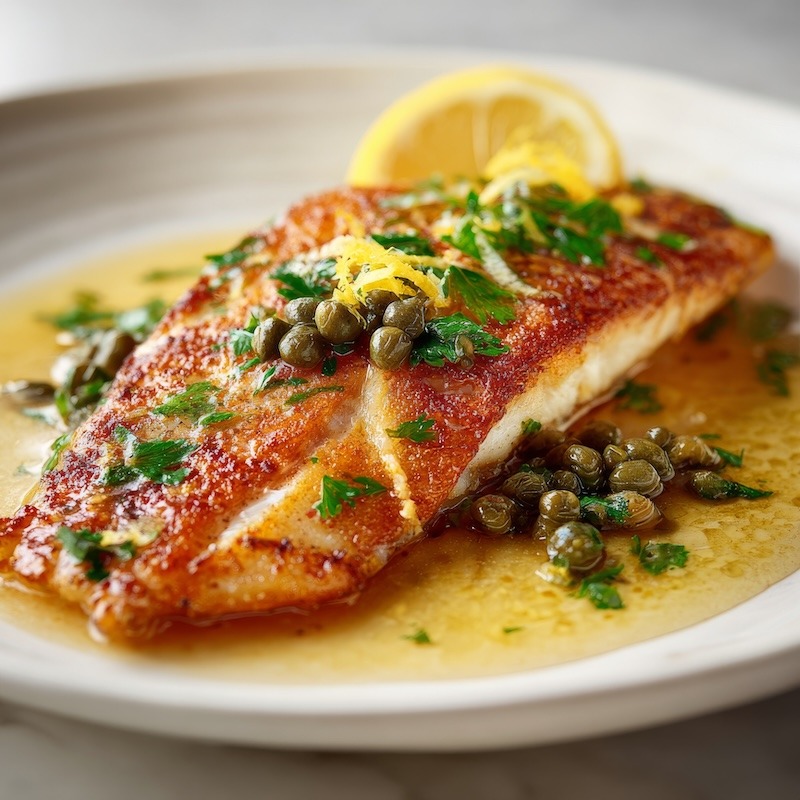
Choose fresh, firm red snapper fillets with the skin on. Look for clear eyes if buying whole fish, and avoid fillets that smell overly fishy. Freshness is key for crisp skin and sweet, moist flesh.
Do I have to cook the snapper skin-side down first?
Yes. Cooking mostly skin-side down ensures the skin crisps without overcooking the delicate flesh. Flip only briefly at the end to finish cooking.
How do I get the skin extra crispy?
Pat the fish completely dry, heat your pan until the oil shimmers, and press the fillet gently onto the pan for the first 10 seconds. Avoid moving it while searing.
Can I use something other than butter in the sauce?
Butter is ideal for richness and emulsification, but you can substitute extra-virgin olive oil for a lighter finish. Add it after the pan is off high heat to prevent burning.
Can I make the lemon caper sauce ahead of time?
The sauce is best made immediately after the fish, using the same pan to capture the browned bits. You can prepare shallots, capers, and lemon juice in advance to save a few minutes.
What should I serve with this recipe?
This dish pairs beautifully with:
- Roasted or mashed potatoes
- Steamed or sautéed green vegetables
- Simple rice or couscous
Keep sides simple to let the fish shine.
Can I use frozen red snapper fillets?
Yes, but thaw completely and pat dry before cooking. Frozen fillets may release more moisture, which can prevent the skin from crisping properly.
How do I adjust cooking for thicker or thinner fillets?
- Thicker fillets: Increase skin-side sear by 1–2 minutes; finish slightly longer on the flip side.
- Thinner fillets: Reduce flip-side time to avoid overcooking.
Can I add other flavors to the sauce?
Yes, optional additions include:
- Red pepper flakes for mild heat
- Sliced olives for Mediterranean flair
- A splash of cream for a richer sauce
Use sparingly to keep the balance of bright lemon and caper flavors.
Why does this recipe work so reliably?
- High heat + dry skin = crisp texture
- Butter added after the fish prevents burning
- Acid added at the end keeps flavors bright
- Capers replace extra salt with complexity
Source link