Frequently Asked Questions
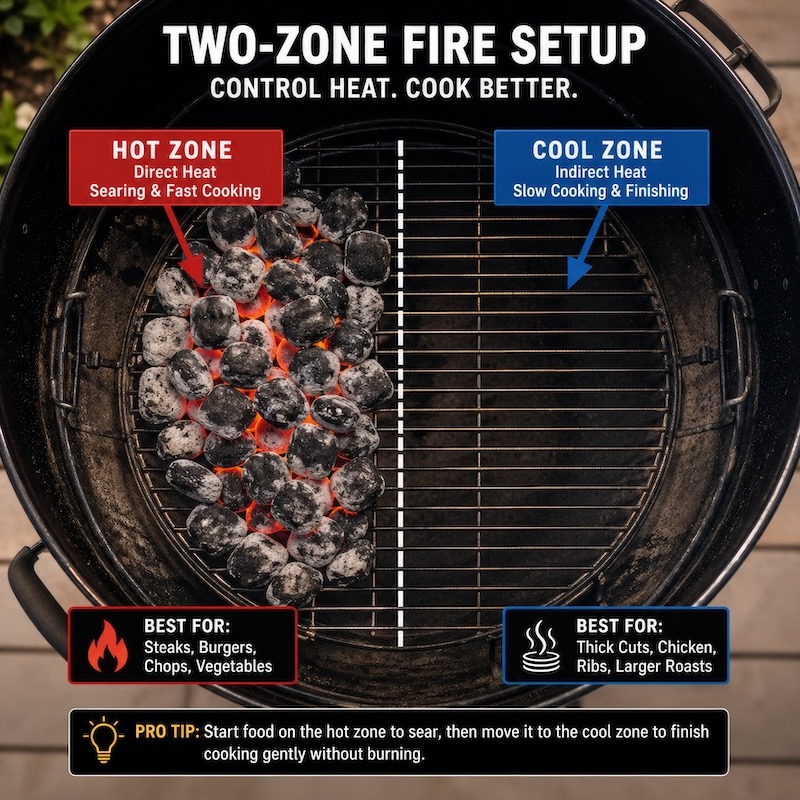
What is two-zone grilling? It’s setting up your grill with one hot side with direct flame underneath and one cool side without —so you can sear over the hot side and finish, rest, or rescue food on the cool side, all on the same grill.
How do I set up two-zone grilling on a charcoal grill? Light a full chimney of charcoal, let it ash over, then dump it all onto one side of the grate instead of spreading it out. That pile is your direct zone; the empty side is indirect.
How do I set up two-zone grilling on a gas grill? Turn on the burners on one side only and leave the rest completely off. The area over the lit burners is direct heat; the area over the unlit burners is indirect.
What temperature is each zone? On charcoal, the direct side usually runs 450°F to 600°F, and the indirect side runs roughly 225°F to 350°F depending on how hot the direct side is. On gas, it depends entirely on how you’ve set the lit burners, but the goal is a similar direct/indirect gap.
What do I do if I get a flare-up? Move the food to the indirect side right away and let the flames die down before bringing it back. Don’t panic and pull everything off the grill entirely — the cool side is there specifically for this.
Is two-zone grilling the same as smoking? Not quite. Two-zone grilling gets the indirect side into roughly the same temperature range smoking uses, but a real smoking setup adds wood for smoke flavor and manages that temperature far more tightly over a much longer cook.
Do I need this for something like shrimp or thin vegetables? Usually not. Thin, fast-cooking foods can go directly over the hot side the whole time — there’s no risk of the outside finishing before the inside does, so a second zone isn’t doing much for you there.
Source link